With her department at UT Austin set to close, a feminist historian traces how studying race, gender and class became central to understanding both the past and the present.
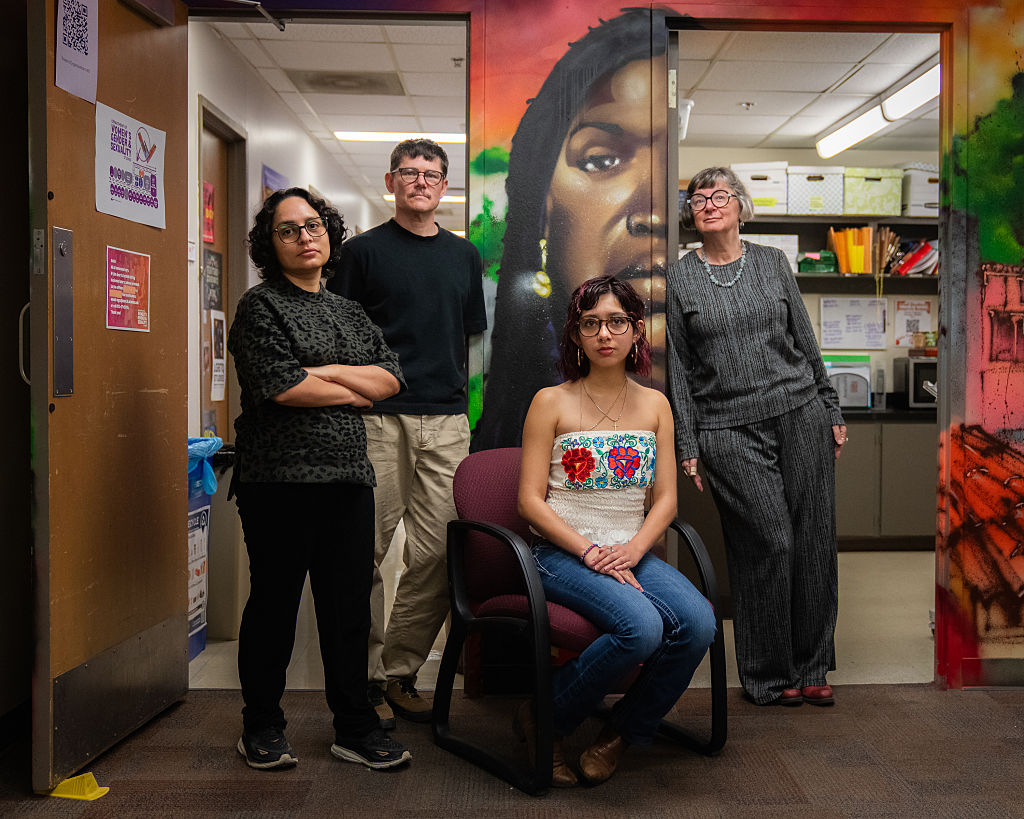
In August, the Department of Women’s, Gender and Sexuality at the University of Texas at Austin will close. I’ve been a member of this department since last year; I came here from the University of Iowa’s Gender, Women’s and Sexuality Studies department, which also closed this year.
I’m just one faculty member among hundreds across the country who are facing elimination of their programs in women’s, gender and sexuality studies, Latina/o/x studies and Black studies.
In recent months, I have been reflecting more on becoming a feminist historian. My teaching and scholarly career is deeply indebted to ethnic studies and women and gender studies. I am a product of the labor of hundreds of student activists and scholars who in the 1960s and ’70s demanded that the histories of Black people, women, Mexican Americans, Indigenous, Asian and queer people be taken seriously as part of a college education.
Today, the United States government hurdles further toward an extreme misogynist and racist conservative right, unleashing policies stripping basic human rights from immigrants, women, queer and trans people, Black, Latino, Indigenous people and those living in poverty.
As a feminist historian, I can tell you: It’s all connected.

Back in 2005, I was an undergraduate student at San Francisco State University (SFSU), and I wanted to bring about positive social change in the world. I took a course on feminist activists and read Angela Davis’ 1981 Women, Race, and Class. Davis, a feminist scholar and Black Power icon, had been a professor at SFSU from 1980 to 1984 in the College of Ethnic Studies. Davis’ book argues that the plight of Black women in America, from slavery to the present, must be understood through the intersectional prism of gender, race and class. Using Black feminist historical analysis, Davis declares that bringing racism, misogyny and poverty to heel is central to the liberation of Black women—and by extension all women of color in America.
In the introduction of her book, she writes:
“It is not for the sake of historical accuracy alone that such a study should be conducted, for lessons can be gleaned from the slave era which will shed light upon Black women’s and all women’s current battle for emancipation.“
From that moment, I knew a feminist view of history could transform how I understood and confronted present-day issues of inequality and how I should teach those ideas to students in the future.
Years later, I was asked to teach Davis’ former “Women, Race and Class” course at SFSU, as I was completing my dissertation on the history of women’s reproductive health and justice along the U.S.-Mexico border. I used her book as the main text for the course but extended the course readings to examine how Mexican-origin women and Latinas, Asian and Indigenous women, Black women and other racialized women experienced their gender, sexuality and class throughout American history.
I honed my feminist historian teaching skills as I taught students how women of color had been central to women’s demands for the vote before the 19th Amendment became law in 1920. Students read the powerful words of women of color suffragists—including Jovita Idar, a Texas journalist and women’s rights activist, who in 1916 declared, “Working women [recognize] your rights, proudly raise your chins and face the fight. The time of your degradation has passed …”
I also taught students about my own research, a feminist historical analysis of how women of color’s experiences with reproductive coercion often complicated contemporary discussions of abortion access. For much of the 20th century, Black, Latina and Indigenous women experienced unparalleled attacks against their ability to build families, accused of having too many children, being a drain on government resources or considered eugenically “unfit” to reproduce. Women of color and people with disabilities were disproportionately sterilized and denied their human right to have children.
Teaching women’s history classes through an intersectional framework helped my students understand that these histories of coercive sterilization campaigns championed in the U.S., especially in places like Puerto Rico, traveled in later decades to India and China. They connected the history of reproductive control campaigns to more recent media alerts of coercive sterilization accusations in women’s prisons and immigrant detention centers.
Year after year, I expanded the curriculum to include the founders of gay and lesbian liberation movements and early transgender rights activists, often forgotten in broader gender and sexuality rights battles. Many of these queer activists set the foundation for expanding healthcare by supporting HIV/AIDs patients when the federal government refused to recognize the epidemic proportions of the disease.
As [feminist studies and ethnic studies departments] are eliminated across the United States, being a feminist historian is now a liability.
Students were enthralled by the class when I first taught it in 2018, just as the #MeToo movement was taking the world by storm. They easily engaged in feminist critique as powerful, wealthy men, including physicians, movie producers, entertainers and media executives, were exposed as violent, sexual predators.
Now in 2026, students continue making connections using a feminist historical framework to bring the 2018 #MeToo movement to the present. As news from the Epstein files has exposed British royal family members, a global cabal of corrupt politicians and financiers, tech moguls, an Ohio lingerie magnate and even those who sought to rehabilitate Epstein’s child-sex-predator image, students cannot help but draw conclusions between this world of unaccountable, misogynist billionaires and histories that denigrate women of color, queer people and those living in poverty.
They also drew connections to stories of how the non-elite fare under patriarchal violence. Students pointed to the horrific story of Gisèle Pelicot, the French woman whose husband sedated her and paid dozens of men to rape her over the course of two decades.
Or the recent denunciation made by labor rights activist Dolores Huerta, who came forward to accuse César Chávez of sexually assaulting her during their time as labor organizers.
With these examples, students were insistent on parsing out how race, gender and class merge in the lives of poor mothers and children fighting for their existence, in immigrant detention centers, in open-air concentration camps in Gaza or as Uyghur families fight separation by state repression.
These horrors were made real to our students as an attack on our humanity because feminist historians have been tracing histories of gendered violence for decades. Nearly 45 years after Davis historicized the triad of women, race and class, we still need this critical framework if we are to move forward with any sense of human dignity and justice in our world.
Every time I’ve taught a version of Davis’ class with her book in tow, it was for a feminist studies or ethnic studies department. As these areas of study are eliminated across the United States, being a feminist historian is now a liability. Still, I hold tightly to the histories and present-day manifestations of solidarity among our students who fought to make these spaces real over 50 years ago and will do so once again.
Ms. Classroom wants to hear from educators and students being impacted by legislation attacking public education, higher education, gender, race and sexuality studies, activism and social justice in education, and diversity, equity and inclusion programs. Cue: a new series from Ms., ‘Banned! Voices from the Classroom.’ Submit pitches and/or op-eds and reflections (between 500-800 words) to Ms. contributing editor Aviva Dove-Viebahn at adove-viebahn@msmagazine.com. Posts will be accepted on a rolling basis.