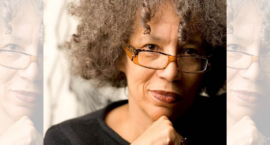
Amid Escalating Attacks on the Voting Rights Act and U.S. Democracy in Crisis, Lani Guinier’s Vision Feels More Urgent Than Ever

Lani Guinier’s birthday was a few weeks ago. She would have been 76 years old. And as I find myself doing each year, I return not just to her work—which speaks powerfully on its own—but to the moments that shaped my understanding of it.

I first met Lani Guinier when I was 15, at a crowded living room gathering where she spoke with remarkable clarity about the Voting Rights Act, representation and the promise of American democracy. Even then, I understood I was in the presence of someone whose ideas would change how we think about power—and whose words would quietly set the course for my own life.

Years later, I would come to know Guinier not just as a towering legal mind, but as a mentor, an ally and, in her own words, a “democratic idealist.”

When her 1993 nomination to lead the Justice Department’s Civil Rights Division was derailed by distortions of her work, she refused to retreat. She kept going—teaching, writing, speaking and pushing the country to imagine a democracy where every vote carries real weight. Her belief that representation must be meaningful—not merely symbolic—remains one of the most urgent and unfinished projects in American public life.

That urgency feels especially sharp now. In the wake of the Supreme Court’s decision in Louisiana v. Callais, which has effectively stripped Section 2 of the Voting Rights Act of much of its force, the distance between the right to vote and the reality of representation has only grown. Lani Guinier understood that gap better than anyone. And she left us not just a critique, but a blueprint—one that continues to guide those of us still working to build a democracy where every voice is not only heard, but truly matters.

Learning From the Archives: Louisiana’s Long History of Reproductive Rights, Health and Justice Advocacy

Despite having some of the most restrictive laws and among the worst reproductive health outcomes in the nation, Louisiana has a long history of reproductive rights and justice advocacy that spans religious, racial and cultural lines. A recent archival exhibit hosted by the Newcomb Institute at Tulane University showcased physical and digital archival collections at Tulane, along with personal and organizational records from community partners, documenting a history of activism from the 20th century to today in Louisiana and the broader Gulf South.

By placing items from the historical archives alongside materials from current community organizations, the exhibit offered a reminder of how long Louisianans have fought to expand and defend reproductive rights and justice within the state.

No Pockets, No Power? The Feminist History of the Purse

With a global market worth of over $56 billion, handbags are one of the main drivers of the fashion industry.

However, as Kathleen B. Casey shows in her latest book, The Things She Carried: The Social History of the Purse in America, they are more than just a fashionable accessory: Women’s purses are an important marker of identity and social status. They are a statement of power, of resilience, of defiance and even protection. Indeed, you can tell a lot about a person from their handbag and what’s in it.

While both women and men have carried bags in the past, it was the evolution of pockets (and lack thereof in women’s clothes) that led to the purse being specifically marked as a feminine accessory, often associated with the female body and particularly the womb. 

With pockets becoming a symbol of functionality and masculinity, it is not a coincidence that utilitarian pockets became a feminist demand. Feminists have long argued for their right to free hands and movement, while keeping their possessions secure and concealed. Pockets were often equated to votes during the suffrage campaign, as activists criticized the lack of both in hindering women’s independence.

Despite being a conspicuous item, one that could be snatched or stolen, Casey is careful to show the power of the purse (pun intended) in offering women the ability to gain visibility in public as equal to men. Women could not only carry with them money, sanitary pads and birth control pills that allowed them freedom of movement and independence, but their bags enabled them to do it while maintaining their respectability and status. At times when women had little control over their bodies, the privacy of their purse offered them an autonomy they could not otherwise gain.

A Public Syllabus on Feminist Resistance Across U.S. History: Books, Films, Archives and Tools to Rethink America’s Origins

This curated public multimedia syllabus spans the Revolutionary era and the long afterlife of feminist resistance—from the 19th century to the present. It includes works by series authors, books and articles, podcasts, films and television, primary-source collections, a Google Map of sites across the U.S. relevant to women’s histories, and a Spotify playlist tracing the legacy of protest music.

Many of these works center marginalized communities and are organized under the themes of Revolution, Resistance and Reclamation.

‘The Other Roe’ Film Shines a Light on Forgotten Abortion-Rights Case Doe v. Bolton

On June 24, 2026, we’ll reach the fourth anniversary of the Supreme Court’s infamous Dobbs decision that overturned Roe v. Wade in 2022. This year, which would have been Roe’s 53rd anniversary, also coincides with the United States’ 250th, reminding us that while the U.S. has been independent since 1776, American women are still far from having full rights and power over our own bodies.

Roe v. Wade, which passed in 1973 and stood for 49 years, gets most of the credit for establishing the national right to abortion. Many people think of Roe as the first big bookend ushering in the right to abortion in the U.S., with Dobbs as the other bookend taking that right away again.

However, Roe wasn’t the only groundbreaking case that paved the way for abortion rights in the U.S. 

Doe v. Bolton, Roe v. Wade’s lesser-known companion case, was argued before the Supreme Court in 1973 the same day as Roe and was equally crucial to abortion rights in the United States.

Black Feminist Visionary Beverly Guy-Sheftall to Discuss New Book ‘Black! Feminist! Free!’ @ LA Ms. Mag HQ, April 23

A leading voice in Black feminist scholarship will take center stage in Beverly Hills later this month, as Beverly Guy-Sheftall joins professor and dean emerita Bonnie Thornton Dill for a public conversation on her new book, Black! Feminist! Free!

The event, hosted at Ms. magazine headquarters in Los Angeles on Thursday, April 23, from 6 to 8 p.m., is free and open to the public. Attendees can expect an evening of reflection, dialogue and community, with light refreshments provided. Copies of Guy-Sheftall’s book will be available for purchase on site, followed by a signing hosted by Reparations Club. RSVP today!

Educating Women: A History of Access, Exclusion and Backlash

The war against “radical gender ideology” has been staggering. The ascent of President Trump brought calls for the elimination of women’s and LGBTQ centers, rollbacks on Title IX protections, the exclusion of trans women from college sports and the purging of gender and sexuality studies from college curricula across U.S. higher education. These actions signal a massive backlash against decades of progress—and are inseparable from a broader assault on civil rights-era protections for people of color.

However, this moment is nothing new. It echoes an earlier race- and gender-based backlash over a century ago, when growing numbers of white middle-class women began to attend college. Against the backdrop of Black emancipation, increased migration and the expanding feminist movement, women’s education was cast as a threat—not just to patriarchy, but to the future of the white race.

Today’s backlash is the latest attempt to restore the status quo—to draw boundaries around who is entitled to higher education and to reinforce a racial and gender hierarchy that has always shaped access to learning in the United States.

(This essay is part of the FEMINIST 250: Founding Feminists series, marking the 250th anniversary of America by reclaiming the revolution through the women and gender-expansive people whose ideas, labor and resistance shaped U.S. democracy.)

Making Disability Visible in History: A Conversation With Rosemarie Garland-Thomson

Dr. Rosemarie Garland-Thomson is a pioneering scholar of bioethics, humanities, disability justice and culture, and professor emerita at Emory University. Widely considered the founder of feminist disability studies, Garland-Thomson is the author of several canonical works, including Extraordinary Bodies: Figuring Disability in American Culture and Literature (1997) and the influential essay, “Integrating Disability, Transforming Feminist Theory” (2002).

On the nation’s 250th anniversary and for the series on “America’s Founding Feminists,” Ms.’ guest editor Janell Hobson spoke with Garland-Thomson about disability history and its connections to women’s history.

She argues centering disability reshapes our understanding of history, citizenship and whose lives are recognized as foundational to U.S. democracy.

“Women’s bodies have always offered men an opportunity to talk about nations, to talk about themselves, to talk about government.”

“… These human variations that we think of as disabilities are often an opportunity for resourcefulness.”

(This essay is part of the FEMINIST 250: Founding Feminists series, marking the 250th anniversary of America by reclaiming the revolution through the women and gender-expansive people whose ideas, labor and resistance shaped U.S. democracy.)

Forget the ‘Manosphere’—The ‘Meno-Sphere’ Is the Voting Bloc With Real Power

A recent report from centrist think tank Third Way predicts many of the “swingy, moderate, low-propensity young men” who supported Trump will sit out the midterms this year.

So who should progressive political strategists and hopefuls turn their attention to? The oft-forgotten, invisible aging woman, or, what we like to call the meno-sphere.

There are many good reasons to prioritize the electoral and mobilization potential of women over 50. Back in 1992, The New York Times published a piece called “Mighty Menopause,” which posited that the then-rise of Baby Boomer women in politics was a direct result of hormonal shifts and that the “biological changes wrought by menopause” ultimately bolster women’s “interest in power and increase their ability to use it.”

If ever there were a moment to prove that to be true, it’s now—as our daughters’ and granddaughters’ rights are rolled back, as communities are terrorized, as the power elite’s willful alignment with the rot becomes clearer by the day.

Olympic Sex Testing Returns, Reigniting Debate Over Who Qualifies as a Woman in Sports

The International Olympic Committee recently announced it will again require genetic sex screening for women athletes and bar many transgender and intersex competitors from women’s events beginning with the 2028 Los Angeles Games—reviving a policy widely criticized for its scientific flaws and human cost, and underscoring the continued relevance of this Ms. article from the October 1988 issue: “Chromosome Count.”

“I am an athlete, and I am a woman—or at least I believe I am. Yet for women competing on the world stage, that identity has long been treated as suspect, subject to invasive ‘verification’ by chromosome testing that claims to define femininity through a lab result rather than lived reality.

“Since 1968, female athletes have been required to submit to these screenings, where something as complex as sex is reduced to XX or XY—despite the many natural variations that defy such rigid categories.

“But these tests have never been as objective or fair as they claim. Women with no competitive advantage have been singled out, humiliated and even disqualified, their identities questioned and their careers erased.

“The story of athletes like Ewa Kłobukowska reveals the human cost of this policy—one built not on sound science, but on fear, misconception and a narrow, deeply flawed definition of what it means to be a woman.”