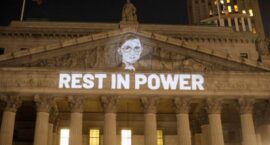
“Notorious RBG: The Life and Times of Ruth Bader Ginsburg” is the memoir that Ginsburg never wrote. The exhibit now at The New York Historical Society traces her life through objects, audio recordings and photographs.
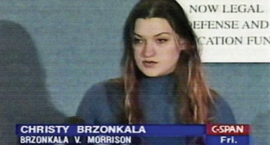
When she was a college freshman in 1994, Christy Brzonkala was gang-raped by two students at Virginia Tech. Brzonkala turned to a law newly passed called the Violence Against Women Act—and her case made it to the Supreme Court, where women’s right to equal protection from violence ultimately died.
When passed, the Equal Rights Amendment would spark Congress to enact new laws on gender violence, including redrafting the Violence Against Women Act civil rights remedy, and chart a path to overturn Brzonkala’s devastating decision.
The Equal Rights Amendment is now one floor vote in the Senate away from finally becoming the 28th Amendment to the US Constitution.
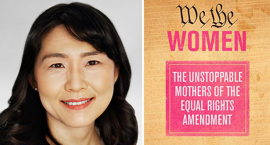
Julie Suk’s recent book, “We the Women: The Unstoppable Mothers of the Equal Rights Amendment,” charts the legal, historical and political significance of the ERA’s current resurgence, enabled by generations of women who have fought for the ERA.
When Lilly Ledbetter, a longtime manager at Goodyear, discovered her salary was significantly lower than her male colleagues, she took the company to court. While her case was overturned at the Supreme Court, her hard work finally paying off when President Barack Obama signed the Lilly Ledbetter Fair Pay Act of 2009 into law as his first official act.
Now, Lilly’s life and her case are going to be the subject of Lilly, a feature film, directed by Rachel Feldman and starring Patricia Clarkson. Ms. interviewed Ledbetter and Feldman about their exciting project.
Lilly is available theaters beginning May 9.
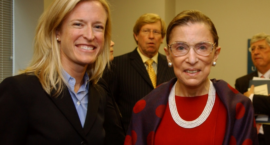
Just three weeks before she died, Justice Ruth Bader Ginsburg and her former law clerk, Berkeley Law Professor Amanda L. Tyler, finished the final manuscript for “Justice, Justice Thou Shalt Pursue: A Life’s Work Fighting for a More Perfect Union.”
Ms. interviewed Tyler about the book, her decades-long relationship with the justice, and Ginsburg’s final thoughts on her legacy and hopes for the future of women’s rights.
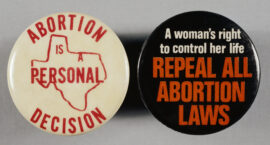
On Tuesday, in its first decision on abortion since Amy Coney Barrett’s confirmation, the Supreme Court opted to reverse an order that allowed medication abortion-receivers to forego an in-person doctor’s visit in light of the pandemic.
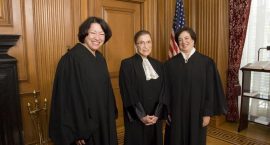
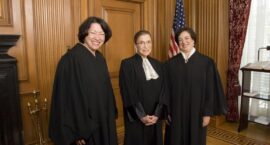
“The FDA’s policy imposes an unnecessary, unjustifiable, irrational and undue burden on women seeking an abortion during the current pandemic,” wrote Justice Sotomayor in dissent.
Despite the political, economic and public health challenges this year—or perhaps because of them—feminists mobilized, fought for our rights, and made progress on many of the issues we care deeply about.
From voter mobilization to reproductive justice, politicians to pop stars, here are our top feminists of 2020.
Justice Ruth Bader Ginsburg’s lifelong work to achieve equality was unrelenting while serving on the Supreme Court. On the other hand, Amy Coney Barrett’s appointment to the Supreme Court puts freedom of choice, affordable health care, marriage equality and other hard-won rights are at risk.
Short of a new administration’s decision to unpack and expand the Supreme Court, the future will be a conservative supermajority on the court.