Of Course Trump Threatened Ballot Access on the 19th Amendment’s Anniversary

The 19th Amendment turned 105 this week. Instead of marking progress, we’re watching Trump officials entertain the idea that women’s right to vote is negotiable. Defense Secretary Pete Hegseth amplified a pastor calling for repeal of the amendment, and when pressed, his office issued a half-hearted “of course” women should vote. We’ve seen this playbook before: Roe was safe, contraception wasn’t at risk—until both were.

Trump himself piled on this week, vowing to eliminate mail-in ballots and voting machines ahead of the 2026 midterms. He can’t legally do it, but the threat is the point. Combined with the SAVE Act, which could disenfranchise married women who changed their names, the message is clear.

The anniversary of women’s suffrage is not just history—it’s a warning flare. The right to vote is under attack, and the fight this time is for all the marbles.

‘Los Angeles Is for Everyone,’ ‘Pay Us What You Owe Us’: The Long History of Women Athletes Leading the Resistance

From protest shirts reading “Immigrant City FC,” to the rallying cry “Pay Us What You Owe Us” at the WNBA All-Star Game, women athletes today are continuing a long legacy of using sports as a platform for resistance.

These moments are more than symbolic—they’re part of a tradition dating back to the 1800s, when women athletes first drew large crowds and demanded change. From suffrage fundraisers to civil rights protests and fights for equal pay, women in sports have always led with courage and conviction.

“Women’s sports is for everyone / es para todos”—and fans, too, have a role to play in this collective movement for justice.

‘We Need to Shift Who Has Power in This Country’: Cynthia Richie Terrell Knows How We Can Cultivate Gender Balance in Politics

In the first episode of the Ms. Studios podcast Looking Back, Moving Forward, Richie Terrell talked to Ms. consulting editor Carmen Rios about the vision of democracy she’s inspired by, practical strategies for advancing gender balance in politics, and what she considers the “gold standard” for equitable voting. 

“It’s no coincidence that the 50 top countries for women’s representation all have either a form of gender quotas, legislative or party-based, or constitutional, or they have a proportional voting system.”

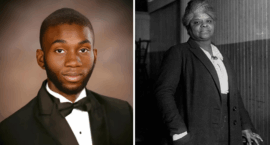
An Unsung Heroine of the Suffragists Can Show Us How to Deal With Failure

I recently spoke with students at the University of Pennsylvania Law School Women’s Association at their annual Carrie B. Kilgore dinner—a gathering of budding lawyers and their professors united in honoring the first woman to attend the Penn Carey Law School and be admitted to the bar in the Commonwealth. 

Giving this speech was a pleasure, not only for the opportunity to encourage and support some of the great lawyers and judges of tomorrow, but because it brought me into contact with the life of Carrie Kilgore, a name, I have to admit, I had never heard before. 

In the research for my remarks, I discovered that Kilgore was a doctor, lawyer and early suffragist, and while known to an extent in the Pennsylvania legal community, her papers have largely been unpublished, her achievements largely unknown to the public. This is a shame—because not only did she live a fascinating, meaningful life, but I think there are lessons that we can take from it as we confront the urgent challenges of the present moment.

On America’s 250th Anniversary, Let’s Remember Women’s Stories: The Ms. Q&A with Jill Hasday

The United States’ 250th anniversary in 2026 presents an opportunity to include women in the stories America tells about itself, according to Jill Hasday, author of the important new book, We the Men: How Forgetting Women’s Struggles for Equality Perpetuates Inequality.

We the Men tells the stories “of so many women who deserve to be remembered,” said Hasday. It also explores the ways in which forgetting women’s ongoing struggles for equality has perpetuated injustice and promote complacency. Remembering women’s stories more often and more accurately can help the nation advance toward sex equality.

Feminist Musicals ‘Teeth’ and ‘Suffs’ Steel Us for the Next Four Years

As feminist resistance faces a critical crossroads, Suffs and Teeth present two diverging paths: marching forward or tearing it all down.

It is the feminist movement’s challenge moving into a time that will most certainly require vigilance and resistance to consider how to reconcile these two paths forward. Will we keep marching? Or will we lick our teeth? 

Tiffany Shlain’s Feminist Art Answers the ‘Urgent’ Call to Fight for Democracy and Women’s Place in History

Artist Tiffany Shlain’s Dendrofemonology: Feminist History Tree Ring is on the move, soon to take up temporary residence in New York City’s Madison Square Park as a focal point for her “Mobilization for Women’s Rights and the Planet” on Sept. 21. Coinciding with the start of climate week and anticipating a historic election, Shlain’s daylong, public activation and rally address a convergence of critical concerns in this “age of urgency.” 

“I’m hoping that the next tree ring moment will be having the Equal Rights Amendment added into our Constitution and sex equality guaranteed across this country,” said Shlain. “And who knows? Maybe there’ll be something else new to burn” into the timeline “in January.”

Celebrating Women Who Aren’t Afraid to Take the Lead

Just days after Vice President Kamala Harris accepted the Democratic party’s official nomination, Gloria Feldt—former Planned Parenthood president and longtime women’s rights activist—convened the 10th annual Take the Lead Conference in Washington, D.C., on Women’s Equality Day.

Hopes are high and determination steeled that 2025 will see the first woman president and the ratification of the ERA. For the hundreds of women and dozens of presenters and organizers who took part in the Take the Lead conference, promoting women’s power at every level and in every field has always been essential to the formula for that success.