Who’s American? Whose America? Bad Bunny’s Radical Halftime Message

Thirteen minutes is how long it lasted, and global superstar Bad Bunny—full name Benito Antonio Martínez Ocasio—more than delivered. Set against pulsating Afro-Latin rhythms and brimming with the energetic dancing bodies of Black, Brown and other multicolored peoples, the 2026 Super Bowl halftime show transformed this historic moment of the first all-Spanish musical spectacle into a cultural reset. Now counted among the most watched halftime performances—with close to 130 million views—the Super Bowl was rightfully renamed the “Benito Bowl.”

Bad Bunny’s performance came just one week after he made history as the first artist recording exclusively in Spanish to win the Grammy’s top honor for Album of the Year. It arrived, too, amid escalating violence tied to ICE enforcement and the policing and deportation of Brown and Black communities. At a moment when the U.S. president is railing against diversity, equity and inclusion—and circulating virulently racist content targeting his predecessor and the nation’s first Black president and first lady during Black History Month—the cultural resonance of this halftime show feels all the more potent.

Bad Bunny’s dynamic performance is an affirmation of the same communities currently terrorized by state-sanctioned violence. At rallies and marches, people play Bad Bunny. In moments of grief and passion, people play Bad Bunny. His refusal to be silenced, to be forgotten, is an inspiration of hope and resilience for social movements. His music is music of the revolution, which was spectacularly televised in the middle of a widely watched football game.  

Bad Bunny’s Super Bowl Show Was a Love Letter to Puerto Rico, the Americas and the Latino Diaspora

Like a 19th-century sugar cane plantation brought to life, Bad Bunny’s Super Bowl halftime show staged a visually rich jíbaro vision of Puerto Rico—the foundational cultural figure representing the island’s self-sufficient, hardworking mountain farmers—in Santa Clara, Calif., a region long shaped by Spanish colonization and U.S. expansion, on land where Ohlone (specifically Tamien/Tamyen) people lived alongside coastal Miwuk, Patwin and Yokut communities.

The show’s imagery underscored layered histories of colonization and empire that resonated beyond the stadium.

A love letter to Puerto Rico, its diaspora and Latino people across the globe, the performance suggested that love was indeed stronger than hate, as millions danced to the sounds of freedom, whether they recognized it or not.

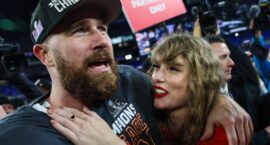
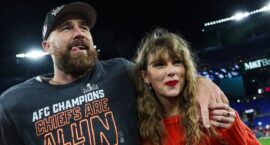
Taylor Swift Is a Threat to the Right—and So Is Travis Kelce

The right is worried about Taylor Swift—and they are right to be. Her influence on millions of young women is legendary, and the way she chooses to wield this influence could make a difference in a close presidential election this November, not to mention electoral battles in years to come.

But there’s another reason MAGA should fear Swift’s cultural power in this volatile political moment. It has to do with Kelce, and the impact he could possibly have on young men.

Travis Kelce, especially if he votes Democratic, profoundly disrupts the right-wing appeal to (white) male identity.

Menopause Went Prime Time at the Super Bowl. Now the Federal Government Must Step Up

Menopause has been sorely neglected by the mainstream medical establishment, by lawmakers, by employers and by just about everyone. As a result, millions of women are left to navigate its most debilitating symptoms with little support.

Menopause is clearly having a prime-time moment—and we think that’s worth cheering. We challenge the National Institutes for Health to design and launch a modern initiative to assert the long-term benefits of hormone therapy and accurately assess its risks.

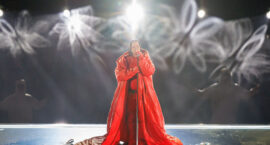
Shine Bright: Rihanna, the Super Bowl, and Performing While Black and Pregnant

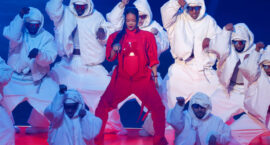
Rihanna’s pop star persona has always maintained this edge of “regular woman” meets “island girl” realness. During her 13-minute halftime show, America rejoiced at the simple magic of a Black woman being herself and resonating across the spectrums of humanity. 

Such hopeful images are especially powerful against the backdrop of disturbing stories of Black women experiencing higher maternal death rates and the realities of how Black pregnant people are devalued in our healthcare system.

I’m Sounding the Alarm Now About Media’s Response to Rihanna’s Super Bowl Halftime Show

The Super Bowl Halftime Show is a time-honored but impossible set-up. Women artists have experienced especially harsh post-show takes. So what will it be in Rihanna’s case?

There’s a tremendous amount of pressure on her performance post-baby, her first live appearance since 2018. The gendered expectations and sexist labeling of women in music vary by individual, and racism has a significant impact in certain cases. But this abuse in all cases works to enforce norms of behavior expected of women.

Perhaps if we recognize the cycle, we might better tune out the toxic takes to come.

NFL Sends Mixed Messages About Gender Violence With Super Bowl Halftime Lineup

During the Super Bowl on Sunday, most of the rappers featured on the biggest stage in the world are known not only for their great talent, wealth and power, but for their misogynous attitudes—and in some cases abusive behavior—toward women, and some of the most gratuitously anti-woman lyrics ever.

“Dr. Dre, Snoop and Em have reached such an elevated status that it’s important to take a step back and think about their body of work. Read or recite their lyrics out loud and you will hear just how anti-woman their music has been over the past 20 years—and not just their music.”