
‘Devastating’: Texas A&M Eliminates Women’s and Gender Studies Degree Program

Texas A&M University announced it is eliminating its women’s and gender studies degree program. University leaders made the announcement alongside the results of a campus-wide course review launched after a video of a student confronting a professor over gender identity content went viral last fall and sparked political backlash.

“Limiting what can be taught in a university classroom is not education,” said Amy Reid, program director for Freedom to Learn at PEN America. “It’s ideological control.”

The canceled courses the university announced Friday were spread across the Bush School of Government and Public Service and the colleges of Arts and Sciences, Agriculture and Life Sciences, and Education and Human Development. The university later identified canceled courses as “Introduction to Race and Ethnicity”; “Religions of the World”; “Ethics in Public Policy”; “Diversity in Sport Organizations”; “Cultural Leadership and Exploration for Society”; and “Diversity, Equity and Inclusion in Youth Development Organizations.”

Texas A&M has made similar cuts in recent years. In 2024, regents voted to eliminate dozens of low-enrollment minors and certificates, including an LGBTQ+ studies minor, a decision faculty said was made in response to conservative criticism and with limited faculty input.

bell hooks Taught Us to Imagine Freedom. Universities Are Forcing Us to Fight for It.

On the day bell hooks became an ancestor, four years ago today, my beloved friend, comrade and co-conspirator Black feminist sociologist Shawn McGuffey and I were consoling one another over text when he wrote, “We should do something.” “Say less,” I replied.

We had institutional support from Northeastern University at a time when universities and other institutions were publicly and ceremoniously committing to funding DEI related initiatives in the tidal wave of so-called racial reckoning that occurred in the aftermath of George Floyd’s death. The first symposium took place two months later on a cold and clear February morning in 2022. This annual gathering became an important tradition that we looked forward to each year.

This week, we mark four years since the woman born Gloria Jean Watkins, a Black feminist writer, academic, professor and activist became an ancestor. But in 2026, there will be no bell hooks symposium at my university. Due to university wide fiscal austerity, we will not mark the anniversary this year in any official way. It is a tremendous loss, for our students and for our community locally, nationally and internationally.

As I grappled with my own grief over this loss, I had to also reflect deeply about what it means to be a Black feminist scholar in the academy today.

Toward More Connected, Caring and Equitable Online Classrooms: Groundbreaking Anthology Advances Feminist Approaches to Remote Teaching

An exciting new anthology, Feminist Pedagogy for Teaching Online synthesizes decades of experience and pushes forward dynamic conversations about feminist pedagogy and remote learning, offering a meaningful and much-needed contribution to this area of research and teaching.

Overall, the collection strives to explore how online education can “align more thoughtfully with intersectional feminism and practices of social justice education.”

Feminist Pedagogy for Teaching Online, in print and as an electronic book, was preceded by the FeministsTeach.org website. The website went viral in August 2020 when large numbers of college professors were grappling with how to teach online. Two of the anthology’s coeditors compiled resources for colleagues at the Newcomb Institute at Tulane University for online teaching.

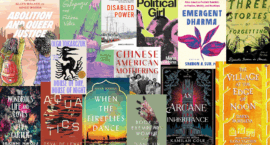
A Feminist Historian’s Year-End Reading and Viewing Guide

As the year winds down, I find myself returning—as I always do—to the stories, performances and ideas that have shaped my teaching and thinking. Feminism’s past is never really past; it’s a living archive we carry with us, full of unresolved questions, missteps, breakthroughs and beautiful, complicated people. This year’s reading and viewing list reflects that sensibility.

Liberation forces its contemporary narrator—and its audience—to reckon with the impossible expectations we’ve placed on small groups of women in church basements.

Molly Jong-Fast’s memoir presses on the tender, maddening ties between feminist foremothers and the daughters who grew up in their shadow.

Sarah Weinman’s study of spousal rape laws exposes just how recently the law stopped treating wives’ bodies as open territory—while showing how fiercely survivors and advocates have had to push for change that should never have been controversial.

Facing Our Violent Histories: Teaching Empathy in a Divided World

One of my international conflict management students at Kennesaw State University recently approached me with a question: How can they be sure that they are not—like the “white theory” dudes they study—imposing their own worldview on the Global South communities they are researching?

As a woman of color from the Global South whose scholarship and practice centers around decolonial feminist peace, my response to my students and others who ask me: Your whiteness does not affect the good work you do; however, not understanding and fully accepting this whiteness as it informs your work probably does.

Decolonial feminism calls for critically reflecting on our own role in generating knowledge (aka conducting research) within the academy, as well as the changes that our scholarship hopes to effect in the real world. When applied to our everyday practice, such reflexivity can minimize the harm we sometimes inadvertently inflict on vulnerable communities and violence-affected people.

Dying to Be Men: American Masculinity as Death Cult

Much as owing guns at home is most likely to injure or kill the people living with those guns than the supposed threats posed by home invaders, the violent discourse espoused by Charlie Kirk and many others has resulted in his murder in front of a crowd of thousands of students.

Kirk built his career on racism and misogyny, encouraging young Americans to the side of a fully radicalized and extremist Republican party that has abandoned any pretense of caring for Americans and instead has become a propaganda machine pathetically flaying to prove that they are all men.

I’m sorry for Charlie Kirk and all the other men like him that have been raised in this America and with these ideals of masculinity. I’m sorry that he decided to adopt this hateful ideology and to profit from it. And as the mother to a boy and a girl, my heart breaks for the America these children are growing up in. Here’s hoping we can save ourselves.

University Leaders Must Act: An Open Letter on the Threats Facing Critical Interdisciplinary Programs Like Women’s and Gender Studies

Academic leaders today face a defining test. As the Trump administration seeks to strip research funding, eliminate diversity and inclusion, and give political appointees sweeping control, presidents and provosts must decide what legacy they will leave. The attacks on women’s, gender and sexuality studies—as well as Africana, Indigenous, disability and other interdisciplinary programs—are part of a broader campaign to delegitimize fields that challenge systems of privilege. We are again in turbulent times, not unlike past eras when leaders had to defend the teaching of evolution, admit women and Black students, or resist political interference. The choices made now will echo for decades.

Despite claims that these programs are too small or unsustainable, the evidence tells a different story. These courses draw students across disciplines, fulfill general education requirements, and prepare graduates for a diverse global workforce. Market data show they are often cost-effective, with faculty teaching across departments and reaching wide audiences. Employers stress the importance of the very skills our graduates carry: critical thinking, collaboration and cultural humility. The question for higher education leaders is clear: Will you stand with these programs that represent the best of our democratic values—or allow them to be dismantled by political opportunism and short-sighted cuts?

Built on Magic: Black Women’s Spiritual Legacy in American History

The “Black Feminist in Public” series continues with a feature on Lindsey Stewart, an associate professor at the University of Memphis, whose latest book, The Conjuring of America: Mojos, Mermaids, Medicine, and 400 Years of Black Women’s Magic, released this week. A native Southerner, born and raised in South Louisiana, Stewart draws on the literary and cultural traditions of Black women in this region, also highlighted in her first book, The Politics of Black Joy: Zora Neale Hurston and Neo-Abolitionism (2021). With our popular culture now learning to celebrate “conjure women”—from Beyoncé to HBO shows like Lovecraft Country and recent films like The Exorcist: Believer (2023) and this year’s SinnersThe Conjuring of America could not have come at a better time.

Ms.’ Janell Hobson spoke with Lindsey Stewart earlier this summer to discuss her latest book.

“So many of the things that we interact with in our daily lives have hidden origins. And Black people are not just Black people, but magic. … I’m interested in how Black women used magic, used conjure to create a sense of safety in their communities. It was a type of luck management.”

“One of the things I’m trying to do with this book is to debunk the scariness and the association with evil that comes out of conjure, because when you look at Black culture, it’s present in so many of the sayings, superstitions, and practices that we use everyday, even though it’s been rejected in these Christian spaces.”

“There’s another lineage of Negro Mammies, another story about Negro Mammies that’s powerful. They were amazing women. And one of the things I wanted to do with this book is help Black women get closer to their ancestors and release the shame about how we survived. These women were powerful.”