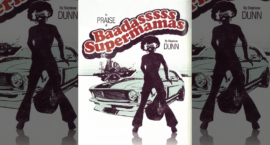
In Praise of Badass Super Mamas (Summer 2008)

From the Summer 2008 issue of Ms. magazine:

The summer of 1973 was the season of the supermama: kickass Black women such as Pam Grier and Tamara Dobson, who starred in big-screen “Blaxploitation” action films.

The cultural nostalgia for Blaxploitation has never really died. And at the movies in recent years, Black women continue to be underrepresented among the latest kick-butt heroes. Yet my hope for new supermamas survives. The screen and action cinema not only have room for Black women—but need them.

(For more iconic, ground-breaking stories like this, pre-order 
50 YEARS OF Ms.: THE BEST OF THE PATHFINDING MAGAZINE THAT IGNITED A REVOLUTION (Alfred A. Knopf)—a collection of the most audacious, norm-breaking coverage Ms. has published.)
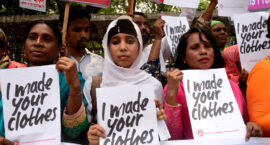
From the Ashes of Rana Plaza: ‘Consumers Want to Know How Their Clothes Are Made’

The year 2013 saw the worst accident in the history of the international garment industry: A clothing factory collapsed outside of Dhaka, Bangladesh, killing at least 1,127 workers, mostly young women, and injuring another 2,500.

“Ten years later, the anniversary of the Rana Plaza disaster offers an opportunity to reflect on the progress that has been made and the work that still needs to be done to ensure decent conditions for Bangladesh’s more than four million garment workers.”

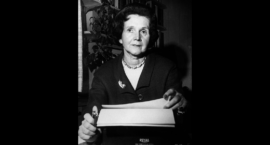
‘Silent Spring’: How Rachel Carson Took on the Chemical Industry and Captured the World’s Attention

On Sept. 27, 1962, Rachel Carson published Silent Spring and founded the modern environmental movement.

Following World War II, the United Stated embarked on a love affair with chemicals. When Carson published Silent Spring at 55, she was dying from breast cancer. Her book alerted the world to the dangers of the toxic chemicals that may have caused her disease. Carson died on April 14, 1964, at 56, never knowing to what extent her work would be vindicated or glimpsing its long-term impact.

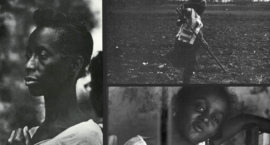
In Search of Our Mothers’ Gardens: The Creativity of Black Women in the South (May 1974)

From the May 1974 issue of Ms. magazine:

“What did it mean for a Black woman to be an artist in our grandmothers’ time? It is a question with an answer cruel enough to stop the blood. … How was the creativity of the Black woman kept alive, year after year and century after century, when for most of the years Black people have been in America, it was a punishable crime for a Black person to read or write? … The agony of the lives of women who might have been Poets, Novelists, Essayists and Short Story Writers, who died with their real gifts stifled within them.”

What Is a Woman’s Novel? For That Matter, What Is a Man’s? (August 1986)

From the August 1986 issue of Ms.:

“Men’s novels are about men. Women’s novels are about men too, but from a different point of view. You can have a men’s novel with no women in it, except possibly the landlady or the horse, but you can’t have a women’s novel with no men in it.”

“Men’s novels are about how to get power. Killing and so on, or winning and so on. So are women’s novels, though the method is different. In men’s novels, getting the woman or women goes along with getting the power. It’s a perk, not a means. In women’s novels, you get the power by getting the man.”

It’s Not Nice to Mess With Mother Nature: Ecofeminism 101 (Jan/Feb 1989)

From the January/February 1989 issue of Ms. magazine:

“One of the most interesting (and least reported on) developments of the last few years has been the integration of feminist and ecological concerns. … In an ecofeminist society, no one would have power over anyone else, because there would be an understanding that we’re all part of the interconnected web of life.”