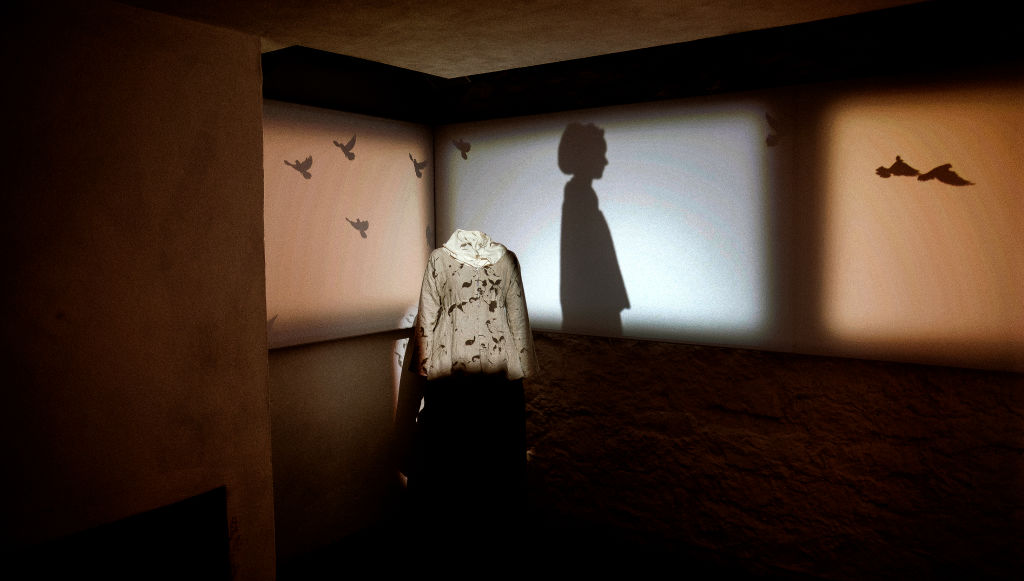
Omer Messinger / Getty Images
What Iran’s Crackdown Looks Like From Inside: A Q&A With Nasrin Sotoudeh and Reza Khandan
Update on Apr. 2, 2026 at 3 p.m. PST: Last night, Iranian authorities arrested Nasrin in her home, confiscated her electronic devices, and took her to an unknown location. Amid the current war and a communication shutdown, she is under extreme vulnerability to life-threatening risks from the regime’s increasing persecution of activists as well as to airstrikes by the U.S. and Israel. Prison facilities have deteriorated under wartime conditions and are among the airstrike targets. Ms. has joined a number of organizations in calling for her immediate release.
As mass protests and a deadly crackdown grip Iran, human rights lawyer Nasrin Sotoudeh speaks from Tehran while her husband, activist Reza Khandan, calls in from Evin Prison—offering a rare, firsthand account of repression, resistance and the stakes for democracy inside the country.
“My message has always been to use all non-violent means to persuade governments to uphold democracy and human rights. Small actions can have big impacts.”
“… You can’t bomb a country into democracy.”
-
The Guise of ‘Parental Rights’ Is Denying Young People Critical Care
-
Wisconsin’s Supreme Court Election Is the Next Big Test in a High-Stakes Year for Democracy
-
Abandoned by the Department of Education, Advocacy Organizations Demand Action on Student Sexual Violence
-
The Antidote to Despair Is Finding our Role in Community Building
-
Furious, Fearless and Defiant: Our Favorite Protest Signs From No Kings 3.0

Get the Ms. Weekly News Digest:
Sign Up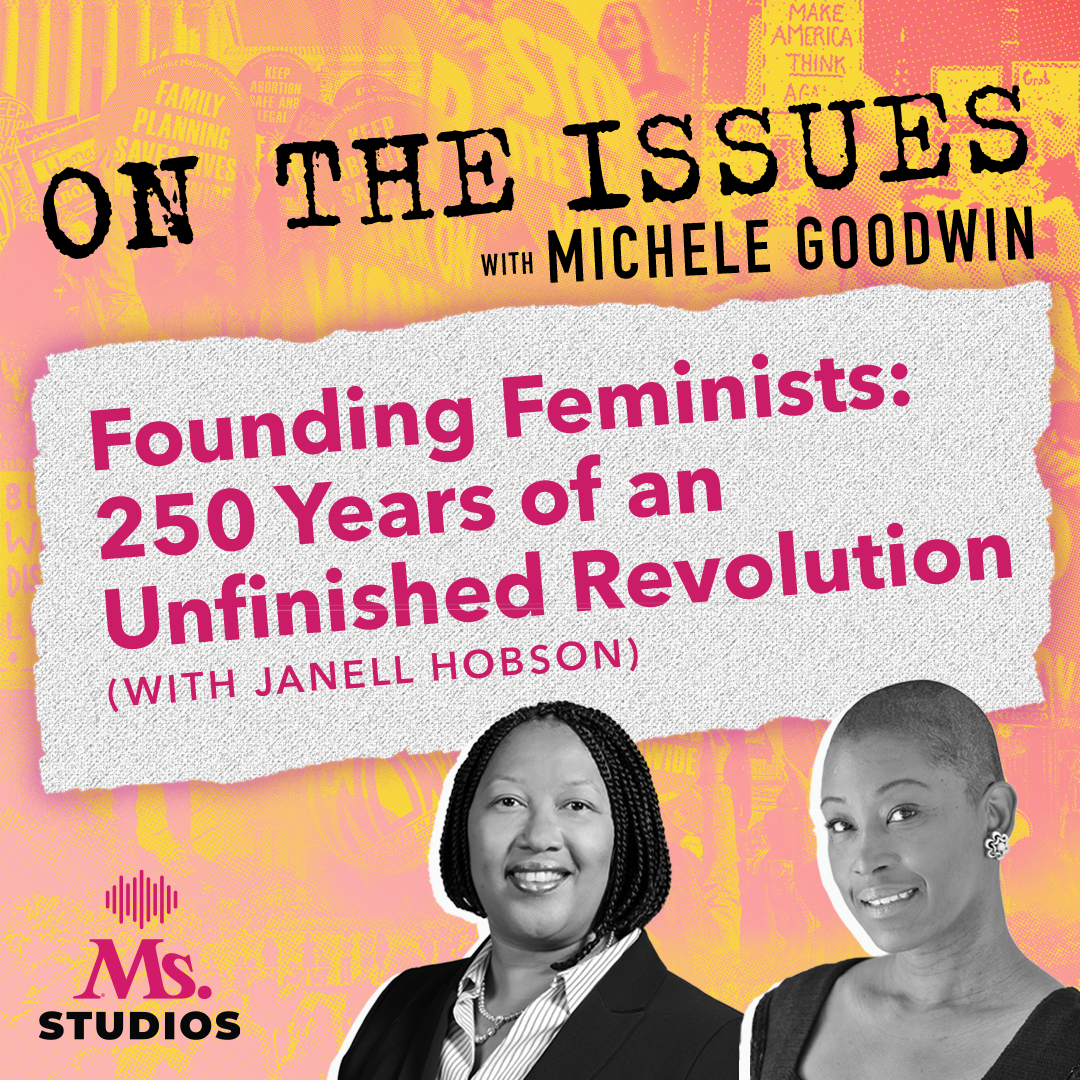
Listen, Rate, Review and subscribe on:



Founding Feminists: 250 Years of an Unfinished Revolution (With Janell Hobson)
Two hundred and fifty years ago, a small group of men declared that “all men are created equal,” casting a vision of liberty that has shaped the American imagination ever since. But even as they debated freedom in Philadelphia, women were writing, organizing, governing, resisting and insisting on their place within the nation taking form.
As Ms. launches a new series on our country’s Founding Feminists this month, Dr. Michele Goodwin is joined by the series’ editor, Professor Janell Hobson, to discuss what America’s 250th anniversary means for women and the feminist agenda.
-
Get the magazine and join the community
Become a Member -
Support Ms.
Donate

National

Drew Angerer / AFP via Getty Images; Michael Siluk / UCG / Universal Images Group via Getty Images; Jeffrey Markowitz / Sygma via Getty Images; art by Brandi Phipps
War on Women Report: Georgia Woman Arrested for Self-Managed Abortion; Idaho Forces Teachers to Out Trans Youth; Ohio Bill to Force Doctors to Report Pregnancies to the State

Feminist Daily Newswire
 Feminist Majority Foundation
- Afghanistan Faces Growing Crises as Aid Cuts, Regional Conflict, and Diplomatic Uncertainty Deepen Civilian Suffering
- We stand with Dolores Huerta
- UN Report: Taliban Policies Are Driving a Health and Human Rights Crisis for Women in Afghanistan
- Taliban Criminal Code Authorizes Beating of Wives as Long as It Does Not “Break Bones”
- The SAVE Act: New Barriers for Women to the Ballot Box

From the Magazine:

Get Ms.’s award-winning feminist reporting delivered directly to your mailbox!
-
Cover Reveal and Spring 2026 Issue Sneak Peek: ICE Is ‘the Army of the Patriarchy’
In early February, while the nation was still reeling from the murders of Renee Good and Alex Pretti by federal agents, Loretta Ross and Jackson Katz—two feminist academics with decidedly different backgrounds and identities—discussed how U.S. federal agents became the enforcement arm of the nation’s racism and misogyny.
You’ll find this, and more, in the Spring 2026 issue of Ms.


Sally Hemings and the Making of Democracy
The United States was founded not through declarations of equality, but through the labor of Black women whose political work reproduced the nation, even as it was erased from the democratic archive.
Sally Hemings is rarely situated within the United States’ democratic legacy, despite her central role in the material conditions through which democracy was made possible.
In shaping the conditions of her children’s freedom, Hemings exercised a form of maternal political authority that governed who could move beyond enslavement. This labor stands in sharp contrast to Jefferson’s authorship of democratic ideals, which articulated freedom in abstract and ambiguous terms, while Hemings produced freedom materially through the governance of reproduction and kinship under constraint.
Hemings’ strategic negotiations secured her and her children’s futures within a political order that both denied her legal personhood and depended on her labor.
(This essay is part of the FEMINIST 250: Founding Feminists series, marking the 250th anniversary of America by reclaiming the revolution through the women and gender-expansive people whose ideas, labor and resistance shaped U.S. democracy.)