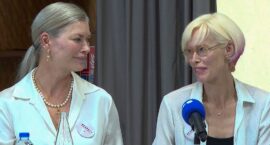
One of us is a doctor, the other a lawyer. We’re also members of a club that no woman ever asks to join, but too many are forced into, often by men they loved and trusted.
JoDee Neil, a Texas attorney and former prosecutor, has spent her career seeking justice for survivors of sexual violence. Now, in her new book Outcry Witness, she tells her own story—one shaped by rape, trauma and the long, uneven path toward healing. As survivors ourselves, we recognized something familiar in each other: the understanding that comes without explanation, and the belief that when institutions fail us, women often become each other’s lifeline.
An “outcry witness” is the first person a survivor tells about their abuse, and that response can shape the course of healing. Neil argues that being believed is not a small act of compassion—it is the foundation on which survivors rebuild their lives.
In an era when powerful men continue to evade accountability, Outcry Witness offers something the legal system too often cannot: validation, community and hope.
Our conversation became more than an interview. It became a reminder that storytelling is itself an act of resistance—that women speaking honestly to one another can challenge shame, expose violence and create the conditions for healing.
“We are at the precipice of the dam breaking,” Neil told me. “We’ve never been able to communicate in real time with each other, to really put the pieces together. … I am so full of excitement to be a part of this movement for humanity.”
Her book is an invitation for survivors to do exactly that.