Chitose Suzuki / The Dallas Morning News via Getty Images
‘Survivors Have Answered Enough’: The Epstein Reading Room Takes Survivors’ Fight on the Road
Attorney General Todd Blanche came to Dallas this week to deliver a “law and order” message at Trump’s midterm rally, where he praised the president and promised accountability for people who break the law. His central line was: “To evil men and women in this country, know this: President Trump will hold you accountable.”
A few miles away, survivors of Jeffrey Epstein’s abuse and their family were asking why that commitment to accountability had not extended to them.
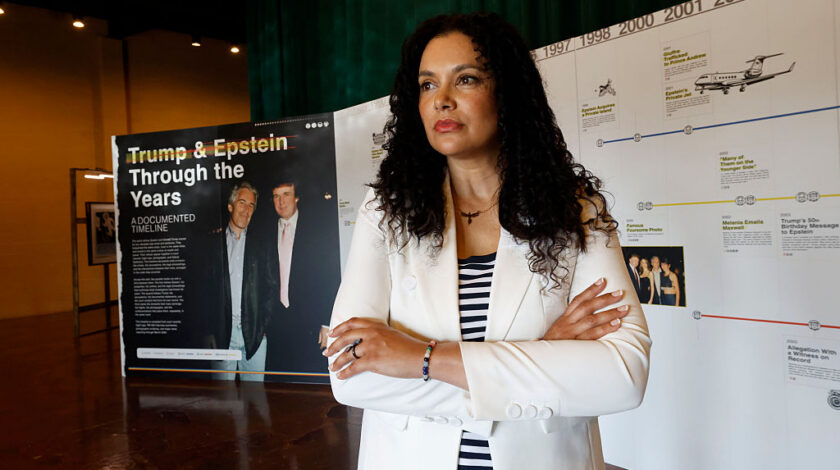
They gathered inside the Donald J. Trump and Jeffrey Epstein Memorial Reading Room, surrounded by 3,437 bound volumes containing nearly 3.5 million pages released by the Justice Department. The books weigh about 17,000 pounds and stretch across hundreds of feet of shelving, turning a sprawling digital archive into something visitors can see, walk through and begin to comprehend.
The scale of the files is staggering, but survivors said releasing millions of pages is not the same as delivering justice. They are still waiting for the Justice Department to release the remaining records, protect their identities and investigate viable leads involving alleged co-conspirators and enablers.
“Justice that stops when it reaches power is not justice,” survivor Sharlene Rochard said.
The thousands of bound volumes make that unfinished work impossible to ignore.
-
After Sept. 11, the U.S. Press Corps Chose Patriotism Over Scrutiny
-
Trump and DOJ’s Epstein Cover-Up Is Front of Mind for Voters Going into Midterms
-
Fifth Circuit Judges Seem Skeptical of Louisiana’s Challenge to Telehealth Abortion
-
What Did Gloria Steinem Mean to You? Share Your Story With Ms.
-
Robin Morgan’s ‘Fighting Words’ for the Work Ahead
-
Who Should Decide Whether a Patient Needs an Abortion: A Doctor or an Opinion Columnist?

Get the Ms. Weekly News Digest:
Sign Up
Listen, Rate, Review and subscribe on:



Justices Sotomayor and Jackson Sound the Alarm on SCOTUS’ Dangerous Deference to Trump on Mail-In Voting
In this episode, Dr. Goodwin breaks down what the latest Supreme Court ruling on voting rights actually says and what it doesn’t. (Of course, it means everyone’s hair is on fire.) Given that this Supreme Court has tried in every way possible to make it more difficult for people to vote, dismantling the Voting Rights Act—an act that had been supported over the years by both Republicans and also Democrats—what hot mess is next?
The 1965 Voting Rights Act was one that had been embraced over the years strongly by Republicans and Democrats. As Dr. Goodwin discusses, this Supreme Court, led by Chief Justice John Roberts, has unraveled it, knowingly pulling the thread in order to disintegrate of one of the most essential pieces of legislation in American history, which protected all Americans. She reminds us that the very first suffragists in the United States were white men who had been dispossessed from the right to vote because they were not wealthy. Sit back and take a listen.
-
Get the magazine and join the community
Become a Member -
Support Ms.
Donate

Feminist Daily Newswire
 Feminist Majority Foundation
- No Girls and women in Classrooms. No Women in Health Clinics. Afghanistan’s Healthcare Crisis Deepens by the Day.
- The Absence of Affordable Child Care is Keeping Women Out of the Workforce
- The Trump-Epstein Reading Room Hits The Road
- Labor Day and the Fight for Women’s Freedom
- Women’s Fight for the Vote: From Suffrage to Today

From the Magazine:

Get Ms.’s award-winning feminist reporting delivered directly to your mailbox!
-
Fall 2026 Cover Reveal: Gloria Steinem Changed the Story, and Taught Us to Keep Telling It
In our Fall 2026 issue, we remember Gloria not only for the words she wrote, the organizations she helped build or the barriers she broke, but for the connections she made.
Perhaps her greatest gift was her ability to listen, to make people feel capable of changing the world, and to build relationships across generations and movements. She knew that the work would outlast any one of us. The responsibility was to keep telling the story—and to make room for those who would tell it next.
Join today to get our newest issue delivered straight to your mailbox—and help sustain the independent feminist journalism Gloria worked to make possible.

Photo by Jenny Warburg



Rest in Power: Gloria Steinem, Ms. Cofounder and Feminist Visionary
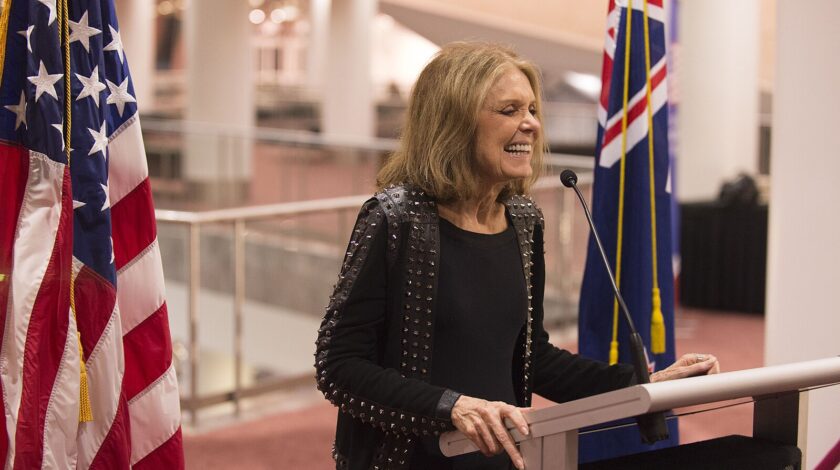
Gloria Steinem, the journalist, organizer and cofounder of Ms. whose name became inseparable from the modern movement for women’s equality, died Wednesday, Sept. 2, at her home in New York City. She was 92.
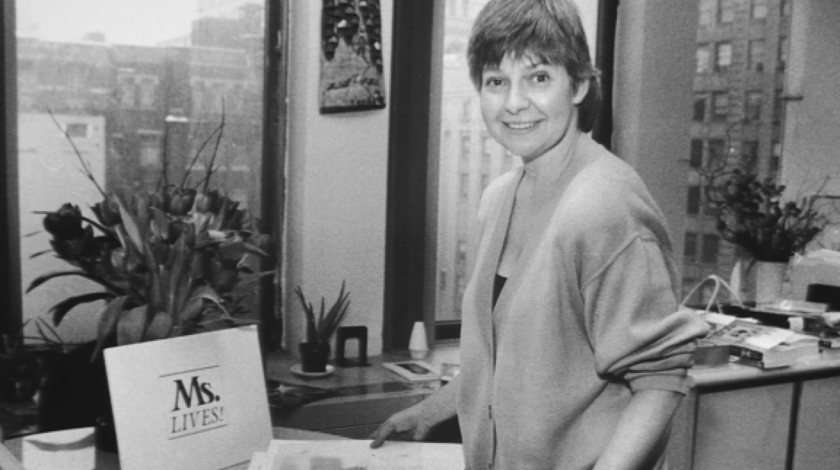
In 2001, Gloria came to Ellie Smeal and me to discuss the possibility of the Feminist Majority Foundation taking on the publication of Ms. She had rescued the magazine from a series of commercial publishers that had nearly killed it, and it was now facing the headwinds of a rapidly changing media landscape.
We understood, we were being entrusted with far more than a publication—we were being asked to preserve an independent feminist institution, and to keep it alive, questioning and relevant for generations.
That responsibility is more urgent today than at any time in recent memory.
Gloria understood from the beginning that feminism needed its own media—not because feminists should withdraw from the larger public conversation, but because independent media can introduce truths the mainstream has not yet learned to recognize.
Gloria Steinem changed the story women were permitted to tell about themselves. Now it is our responsibility to keep telling the truth.