

‘The Other Roe’: Abortion Documentary Spotlights Atlanta Attorney Margie Pitts Hames

Most people are unaware that Roe v. Wade and Doe v. Bolton were both argued on the same day before the Supreme Court and upheld in the 1973 decision that legalized abortion. Roe legalized the right to abortion, while Doe ensured its availability and accessibility.

After nearly 50 years, both decisions were overturned in the Dobbs v. Jackson Women’s Health case in June 2022, leading to a fragmented legalization of abortion across the country. Ironically, the Jackson clinic that brought the suit was started by Susan Hill and me in 1995.

I was puzzled that the Doe decision and the lawyer who argued it, Margie Pitts Hames, did not have a more prominent place in the history of abortion rights. So I’m making a documentary about her and the case, called The Other Roe.
‘Life and Death Decisions in Post-Roe America’: The Ms. Q&A with Shefali Luthra

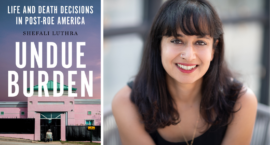
Roe v. Wade was overturned on June 24, 2022. But according to Shefali Luthra, author of Undue Burden: Life and Death Decisions in Post-Roe America, “it had been on the verge of collapse for decades.” After all, most Medicaid recipients had lost insurance coverage for the procedure in 1977 and a plethora of restrictions—from parental consent and notification requirements for minors, to mandated counseling sessions to dissuade people from ending their pregnancies—had long kept procedural abortion out of reach for large segments of the population.

Undue Burden digs into this lack of preparedness by introducing diverse people who have been directly impacted by the decision—people who have had to travel hundreds of miles to have an abortion, people whose highly-anticipated pregnancies became untenable, a trans man who became pregnant shortly after beginning his transition, and a young couple who lacked the emotional and financial resources to welcome a second child, among them. Their stories are juxtaposed with those of overwrought clinicians as well as staff at abortion funds. The result is a poignant and dramatic look at the stakes of losing Roe and a compassionate assessment of the human toll wrought by Dobbs.

The Hypocrisy of a Post-Roe Mother’s Day

This Mother’s Day—like the countless that have come before it—conservative politicians who fancy themselves members of the party that upholds “family values” will send out social media posts praising the moms among us. They’ll wax poetic about the “decision” to become a mother and how it’s the “most selfless, most important job in the world.” Some may even go so far as to task their speech writers with crafting some moving message about how vital mothers are; how we’re raising the next generation of prolific thinkers and world leaders; how we should be revered “not just today, but every day.” 

And in the post-Roe world they created with their anti-abortion policies that have forced people into motherhood, attacked IVF and fertility treatments, and left doctors terrified to treat pregnant patients to the point that women are slipping into comas, miscarrying in hospital lobby bathrooms and enduring unnecessary C-sections instead of receiving common abortion care, it will all be one big, giant pile of bullshit.

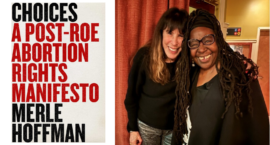
Merle Hoffman’s Post-Roe Abortion Rights Manifesto: ‘Anger Is Our Sacred Fuel’

In her new book Choices: A Post-Roe Abortion Rights Manifesto, Hoffman shares her 50-plus year fight for abortion access, including co-founding the first professional organization of abortion providers in the U.S. in 1976, the National Abortion Federation, and in 1985 founding the New York Pro-Choice Coalition. Part memoir, part call to arms, Hoffman’s book offers an engaging and thought-provoking assessment of how we lost the right to abortion and what we need to do today to achieve “legal abortion on demand nationwide.”

Reproductive Healthcare 51 Years After Roe: Unreachable Abortion Clinics, Chaos and Countrywide Confusion

Reproductive healthcare experts say the post-Dobbs period will feature tens of thousands of forced births purely because of clinic closures—many abortion seekers will be too far away from the ones that remain open. Access is further interrupted, they said, by court decisions so confusing that providers do not know if and when they can legally dispense abortion medication or intervene with abortion care to save lives.

Domestic Violence Calls About ‘Reproductive Coercion’ Doubled After the Overturn of Roe

Reports of abuse involving reproductive coercion—actions that prevent someone from making crucial decisions about their body and reproductive health—nearly doubled in the yearlong period after Roe v. Wade was overturned.

Reproductive coercion can take the form of any situation in which one partner is exerting power over another in a way that impacts their reproductive health: forcing someone to engage in sexual activity, refusing to use contraception, restricting a partner from seeing a healthcare provider, telling a partner they are not allowed to receive abortion care.

Immigrant Justice Is Reproductive Justice: Latin Communities Under Attack Post-Roe

Latinas are disproportionately affected by harmful immigration policies and the continued attacks on abortion care one year after the Dobbs decision ended the constitutional right to abortion.
National Latina Institute for Reproductive Justice’s Lupe M. Rodríguez talks about her own experience coming to the U.S. and why the Biden administration must do everything it can to improve our immigration system.

“I know firsthand that far too many of our families live in constant fear of the threat of deportation, detention and separation. This pushes us further into hiding and prevents us from living healthy and safe lives.”

How the Overturning of Roe Is Causing a Ripple Effect in Ethiopia

In Ethiopia, where I am from, abortion has been legal under a broad range of circumstances for 18 years, empowering women to take control of their futures and saving countless lives. I am so proud of the steps the government in Ethiopia has taken to expand access to abortion over the last two decades. Still, since the overturning of Roe v. Wade in the U.S. last year, these gains are looking increasingly vulnerable.

Without Roe, Abortion Pills Are More Important Than Ever. We Must Remove Barriers.

Since the fall of Roe, at least 66 clinics have stopped providing abortion care. Many people have found essential care by purchasing abortion pills online and having them delivered by mail.

As we continue into the post-Roe future, we must address the inequalities that limit these innovations in states where telehealth is legal, but also in states where it is illegal.

SCOTUS Was About to Overturn Roe. Kirsten Gillibrand Still Gave Me Paid Leave.

A firsthand account of the life-saving benefits of paid leave, and its vitality in our post-Roe society:

“You cannot push yourself through a grade-three concussion … but despite my self-pitying, my coworkers were getting the job done without me. … The irony of being on paid leave while abortion rights were about to be decimated was not lost on me either. … No one should ever have to make that impossible choice between their health and their paycheck. We need to pass national paid family and medical leave.”