
Advocates across the U.S. were shaken by Supreme Court’s decision to overturn Roe v. Wade — threatening abortion rights across the U.S. — this past June. For women in Poland, this is a painfully familiar story.


More Than A Magazine, A Movement

Advocates across the U.S. were shaken by Supreme Court’s decision to overturn Roe v. Wade — threatening abortion rights across the U.S. — this past June. For women in Poland, this is a painfully familiar story.

Abortion providers bear witness to the immediate and devastating effects of the Supreme Court’s decision to overturn Roe.
“It has become devastating to practice medicine,” said Dr. Ellie Ragsdale, an ob-gyn who specializes in high-risk obstetrics and fetal therapy at an academic medical center in Cleveland. “You come to work every day and hope that the decisions you make are the best decisions for your patients, and that those decisions don’t land you in jail.”

Access to information is critical for reproductive rights and in promoting gender equality. The anti-abortion movement knows this—so one of their tactics is to instigate confusion, blur the lines between opinion and facts, and in that confusion, instill fear and obstruct people from making informed decisions in their own lives.

U.S. patriarchal authoritarianism is on the rise, and democracy is on the decline. But day after day, we stay vigilant in our goals to dismantle patriarchy at every turn. The fight is far from over. We are watching, and we refuse to go back.
The last month has been a real whiplash for women. Let’s remember what was hurled our way. Plus—as we approach the midterm elections, Republican lawmakers have continued the ruthless attack on abortion access nationwide. But will it cost them?

Right-wing dark money groups are peddling the notion that abortion access “harms” women and, even more outlandish, that the Dobbs decision overturning Roe “empowers” them. This position essentializes women by suggesting their value is centered around motherhood. It also uses pseudo-feminist claims to detract from the very real dangers a post-Roe landscape presents for people and the myriad ways abortion access has helped advance gender equality in the U.S. in the last five decades.

Black women’s health and bodily autonomy have been under consistent, unrelenting attack for centuries, a reality that holds true today. The Supreme Court’s decision to overturn Roe v. Wade and deny millions of people the constitutional right to abortion is expected to disproportionately hurt Black women. Policies that seek to improve Black maternal health must necessarily include policies that expand access to abortion care.
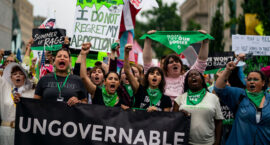
Abortion is a critical component of reproductive healthcare, and young Louisianans will continue to need it.
As Louisianans, we must ask ourselves: How can our legislators claim teens are not mature enough to learn about how their reproductive bodies work, while presuming they can cope with forced parenthood? Abortion is a critical component of reproductive healthcare, and young Louisianans will continue to need it.

While we are only just beginning to scratch the surface of the kinds of horrors that banning abortion will create in the U.S., our neighbors in Latin America have understood this reality for years. We cannot afford to ignore the wins and the lessons learned from our neighbors and friends around the globe as we embark on the long road ahead to rebuild power and restore our right to abortion in the U.S.

Young people are taking to the streets to protest, lobbying their elected officials and taking to activism in droves to make abortion accessible for those who need it. National Youth Poet Laureate Alyssa Gaines is using her writing to affirm the need for abortion care and to reach those most impacted by anti-choice legislation.
“It’s my responsibility to reach out and try to connect to those people instead of just writing them off.”

The landscape of “abortion deserts” in this country now glaringly resembles the map of where we see the highest rates of food insecurity. The people forced to seek abortion care hundreds of miles away from their homes are the same parents skipping meals so their kids can eat, scrambling to fulfill SNAP work requirements and grocery shopping with calculators to stretch their government benefits as much as possible.