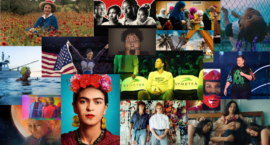
In a year filled with groundbreaking storytelling, feminist documentaries released this year inspired, educated and sparked vital conversations. Here are some of the best feminist documentaries streaming in 2024.


More Than A Magazine, A Movement

In a year filled with groundbreaking storytelling, feminist documentaries released this year inspired, educated and sparked vital conversations. Here are some of the best feminist documentaries streaming in 2024.
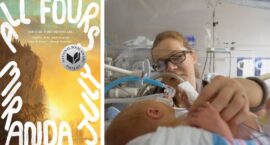
When November’s announcement by the CDC that our infant mortality rate remains abysmal did not make even the tiniest of dents in the post-election news cycle, my thoughts pivoted from the patient’s I’ve lost as a doctor who cares for critically ill newborns to Miranda July’s blockbuster summer novel All Fours.
As I read, I could not help but wonder how to help parents like this narrator, the same parents I care for daily, feel in real time that NICU stories are a mainstream part of comprehensive reproductive healthcare.
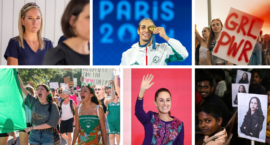
Every day of 2024, Ms. writers and editors set out to create content that empowered, informed and infuriated readers. We sought out the truth, sounded alarms, asked tough questions, mourned feminist losses (and feminists we lost), looked to gender justice advocates abroad, and handed the microphone over to experts. Dear reader: As we enter a new year and a new era of the movement, we promise you more of this.
Explore the 30 most popular articles published this year on MsMagazine.com—the articles feminists most clicked, shared, studied, bookmarked and passed out at marches.

Across the country, hospitals are dispensing medications to patients in labor, only to report them to child welfare authorities when they or their newborns test positive for those very same substances on subsequent drug tests.
Amairani Salinas was 32 weeks pregnant with her fourth child in 2023 when doctors at a Texas hospital discovered that her baby no longer had a heartbeat. As they prepped her for an emergency cesarean section, they gave her midazolam, a benzodiazepine commonly prescribed to keep patients calm. A day later, the grieving mother was cradling her stillborn daughter when a social worker stopped by her room to deliver another devastating blow: Salinas was being reported to child welfare authorities. A drug test had turned up traces of benzodiazepine—the very medication that staff had administered before wheeling her into surgery.

Music feels healing, but can it actually heal us? The answer is a resounding yes—according to Sound Health, a collaborative project run by the National Institutes of Health (NIH) and the John F. Kennedy Center for the Performing Arts.
The Sound Health Network began in 2016 after a chance meeting of Dr. Francis Collins, the former NIH director, and Renée Fleming, the globally renowned and five-time-Grammy-award-winning American soprano. Over the past eight years, the partnership, in association with the National Endowment for the Arts (NEA) and the University of California San Francisco (UCSF), has raised awareness about the healing benefits of music and advanced research at the intersection of arts and wellness.
Ms. recently spoke with Fleming and Collins about their journeys to connecting music with health, what we know so far about music’s effect on the brain, and how we can use that knowledge to heal ourselves.
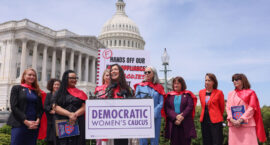
The Democratic Women’s Caucus (DWC) this week announced the election of Rep. Teresa Leger Fernández (D-N.M.) as DWC’s chair for the 119th Congress, which starts in January. Leger Fernández served as the DWC vice chair in the 118th Congress and will now lead the largest ever DWC, which includes a record-breaking 96 members in the new Congress.
Ms. executive editor, Kathy Spillar, sat down with Rep. Leger Fernández, to discuss priorities for the DWC—both to fight back against what will be repeated attacks by the Trump administration on women’s rights and programs benefiting women and their children, as well as strategies for moving forward toward equality.

In her new documentary, Bread & Roses (available now on Apple+), filmmaker Sahra Mani reveals the fierce and courageous resistance of Afghan women defying the Taliban—who wish to make them disappear.
It’s a documentary about Afghan women, by Afghan women, at a time when the world had stopped seeing them.
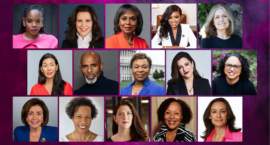
“The most powerful and trusted messenger you have in reaching your community is you.”
“Half this country is female, and half is composed of people of color. Until those exclusions are gone, we are not living in a true democracy.”
“Keep it moving. That’s the only way.”
“Anyone can lead, especially on the issues that they care about.”
Some thoughts to keep us going.

“If candidates can win by effectively feminizing their opponents, what does it mean when a woman enters the race?”
Drs. Jackson Katz and Caroline Heldman—longtime friends and colleagues—discuss the presidential election, the “uphill climb” for women in politics, and how political parties can combat the gender penalty.

Although she won a scholarship to Mississippi State University, two hours’ drive away, Shamya Jones couldn’t get there because she had a new baby and no car. So she enrolled instead at a local community college, then transferred to the four-year campus closest to her home in the rural Mississippi Delta: Delta State University.
She planned to major in digital media arts, but before she could start, Delta State eliminated that major, along with 20 other degree programs, including history, English, chemistry and music.
“They’re cutting off so much, and teachers [are] leaving,” Jones said. “It’s like we’re not getting the help or benefits we need.” The cuts “take away from us, our education.”
That kind of frustration is growing. Rural Americans already have far less access to higher education than their counterparts in cities and suburbs. Now the comparatively few universities that serve rural students are eliminating large numbers of programs and majors, blaming plummeting enrollment and financial crises. Many rural private, nonprofit colleges are closing altogether.